What NSW Law Actually Requires for Pool Fencing
Every residential swimming pool or spa in NSW must be enclosed by a compliant barrier. This is not optional, and it applies regardless of pool size, age, or whether the pool is in-ground or above-ground.
The rules are set out under the Swimming Pools Act 1992 and the Swimming Pools Regulation 2018, and they reference the Australian Standard for swimming pool barriers (AS 1926.1). Understanding what these rules require is the first step to avoiding fines and, more importantly, keeping children safe.
Pool Fence Height: The Minimum You Need to Know
The minimum pool fence height in NSW is 1200mm, measured from the finished ground level on the outside of the barrier. That measurement matters because it is taken from the climbable side, not from inside the pool area.
The top 900mm of the fence must be non-climbable. This means no horizontal rails, no footholds, and no decorative features within that zone that a child could use to climb over. Many homeowners are caught out by fencing that looks compliant but fails this specific requirement.
The Non-Climbable Zone and Why It Trips People Up
The non-climbable zone (NCZ) is one of the most commonly misunderstood parts of pool fence compliance. It applies not just to the fence itself, but to any object within 900mm of the outside face of the barrier, including garden furniture, pot plants, retaining walls, and pool equipment.
If a chair or planter box sits close enough to the fence to act as a step, the fence fails inspection regardless of its height. Keeping the area around the outside of the barrier clear is an ongoing responsibility, not just a one-time installation concern.
Gates, Latches, and Self-Closing Requirements
Compliant pool gates are also mandatory, and every gate in a pool barrier must be self-closing and self-latching. The latch must be positioned on the inside of the gate, at least 1500mm from the ground, or it must be enclosed so that a child cannot reach through and release it.
Gates must open outward, away from the pool. A gate that swings inward does not comply, even if everything else about the fence is correct. These details are worth checking carefully before any pool fence inspection.
Hinges, latches, and gate frames deteriorate over time. A gate that passed inspection two years ago may no longer close and latch reliably, which creates both a safety risk and a compliance issue.
What Counts as a Boundary Fence Versus a Pool Barrier
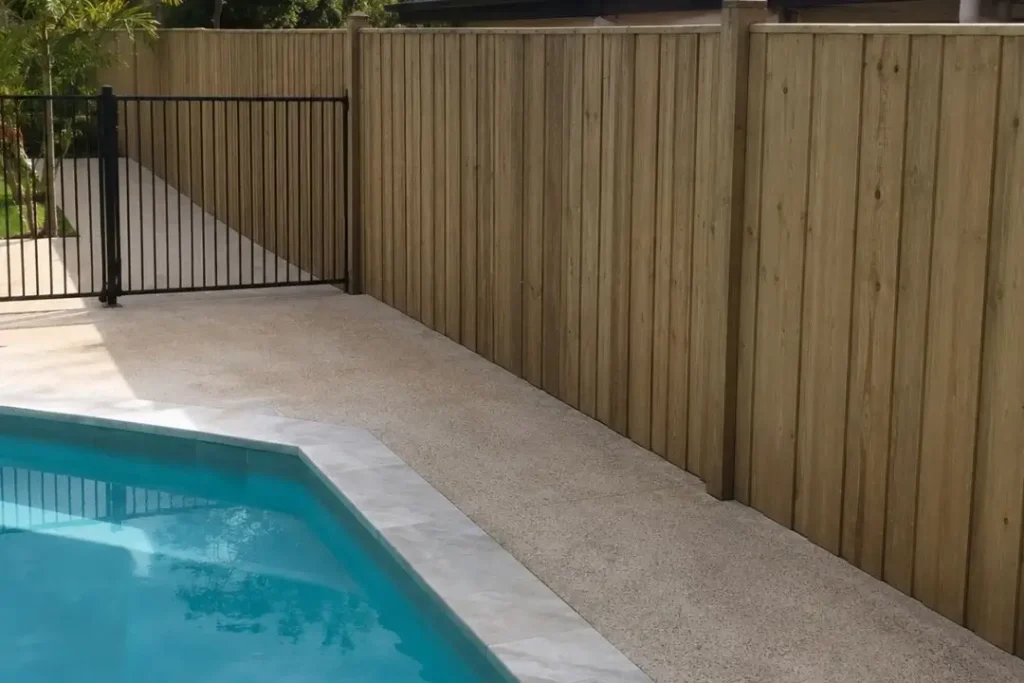
In some situations, a boundary fence can form part of a pool barrier, but only if it meets all the same requirements as a dedicated pool fence. The height, non-climbable zone, and surface requirements all still apply.
A standard timber paling fence along a property boundary almost never meets pool barrier requirements without modification. The horizontal rails on the inside face typically create climbable footholds, and the height is often insufficient. Using a boundary fence as part of your pool barrier is possible, but it requires careful assessment before assuming it qualifies.
Pool Fence Inspections in NSW: When They Are Required
NSW law requires pool owners to register their pool on the NSW Swimming Pool Register and have it inspected for compliance. Inspections are carried out by council or a private certifier, and a certificate of compliance is required before a property with a pool can be sold or leased.
Lismore City Council handles pool registration and inspection obligations for properties in the area. If your pool is not yet registered, or if you are unsure whether your current barrier would pass inspection, it is worth sorting that out before you are required to do so under a sale or lease transaction.
Certificates of compliance are valid for three years. After that period, a new inspection is required if the property changes hands.
New Pools Versus Existing Pools: Different Rules Apply
Pools built before 1 August 1990 are assessed under older standards, but they are still required to meet a minimum level of compliance. Pools built after that date are assessed under progressively updated versions of AS 1926.1, depending on when they were constructed.
If you are installing a new pool or replacing an existing barrier, the current standard applies in full. This is worth factoring into your budget and planning, particularly if you are upgrading an older fence that was built to a previous standard.
What Happens If Your Pool Fence Fails Inspection
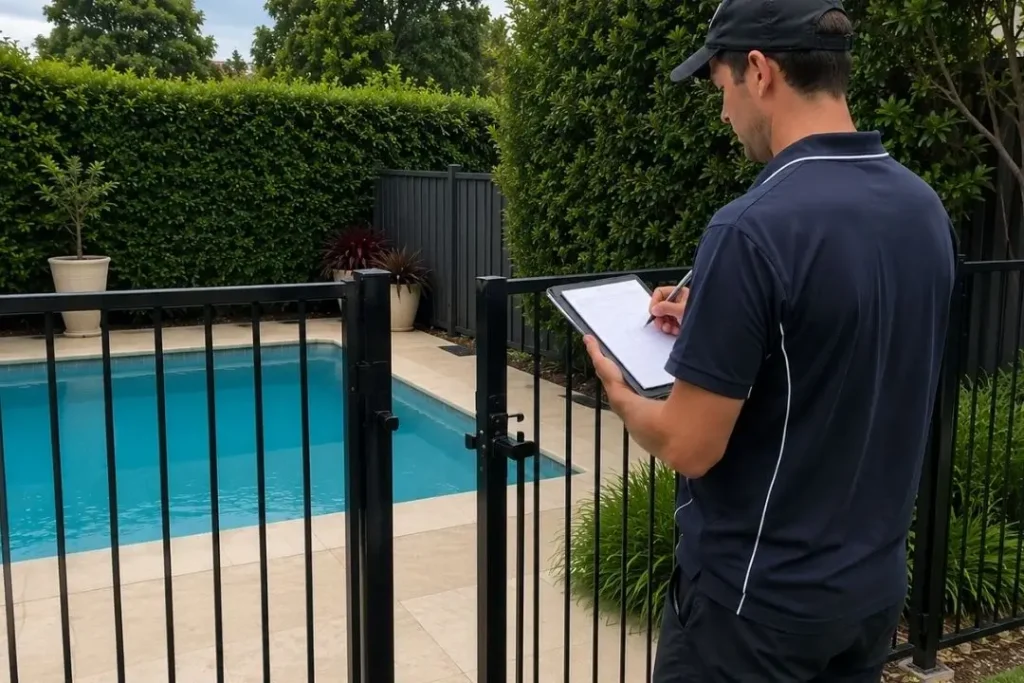
A failed inspection results in a non-compliance notice, which gives you a set timeframe to rectify the issues. If the problems are not fixed within that period, council can issue a penalty notice.
More serious consequences apply if a child is injured due to a non-compliant barrier. The legal and personal consequences of that outcome are significant, which is why compliance is treated seriously under NSW law rather than as a bureaucratic formality.
Most failures come down to a small number of recurring issues: incorrect gate latches, climbable objects near the fence, inadequate fence height, or gaps at the base of the barrier. Identifying and fixing these before an inspection saves time and avoids the cost of a re-inspection.
Choosing the Right Pool Fencing Material
Glass, aluminium, and steel are the most common materials used for pool fencing in residential settings. Each has different maintenance requirements, cost profiles, and suitability depending on the site.
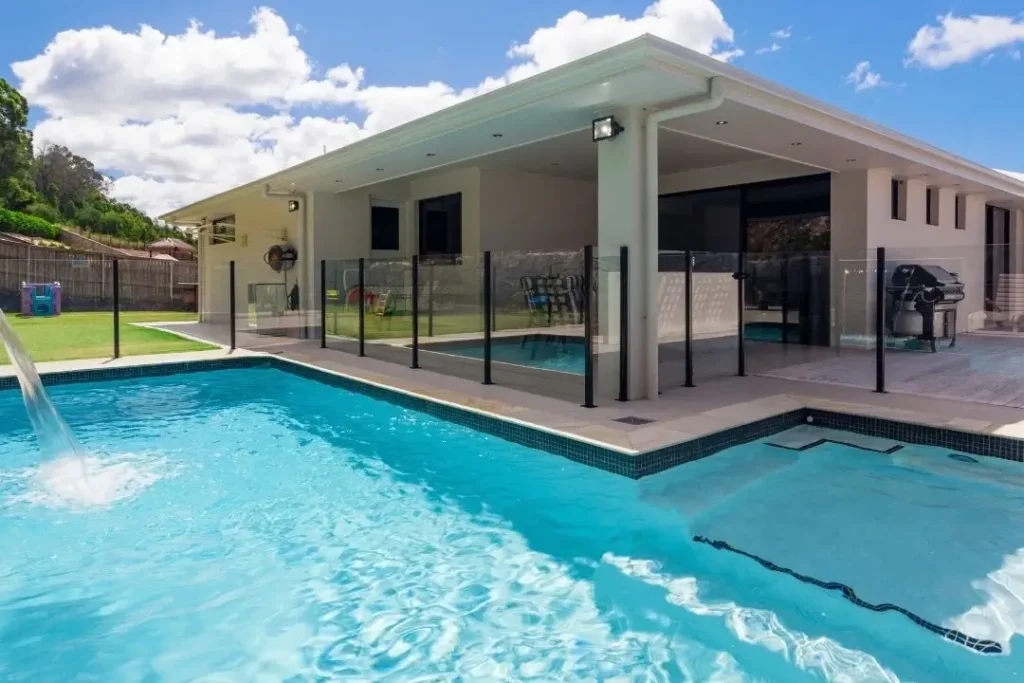
Frameless glass is popular for its unobstructed sightlines, which makes it easier to supervise children in the pool. Aluminium pool fencing is durable, low-maintenance, and available in a range of styles that meet the non-climbable zone requirements without modification.
The right choice depends on your budget, the layout of the pool area, and whether the fence needs to integrate with other fencing on the property. A site assessment before committing to a material will save you from costly changes later, particularly if pool fencing is just one part of a wider project and you’re still working out how much a new fence will cost.
Before You Build or Replace a Pool Barrier
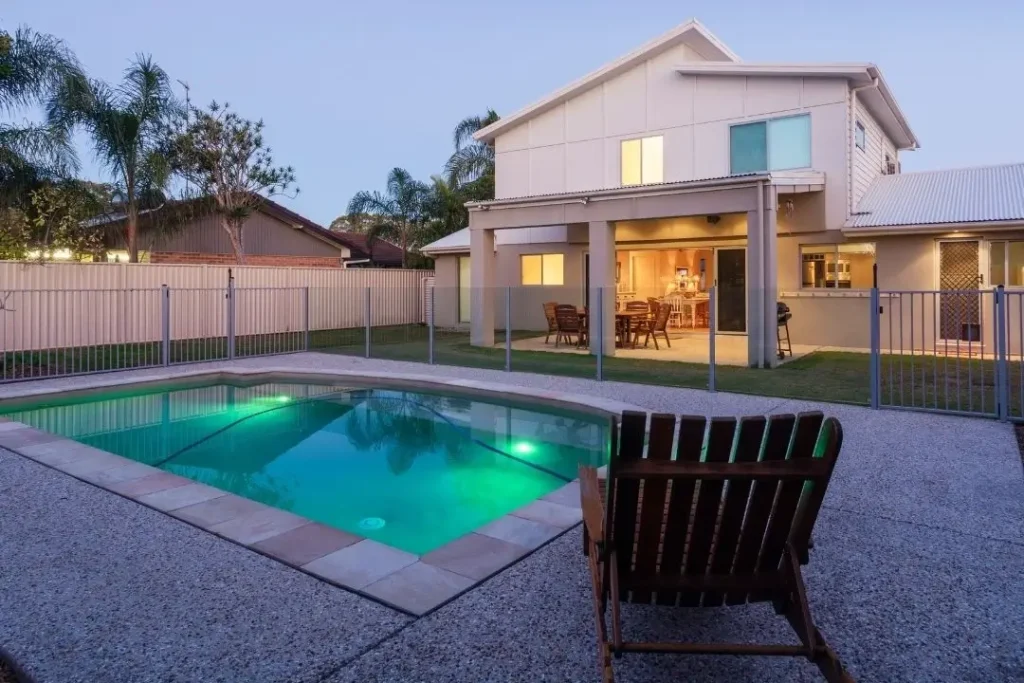
Check whether your council requires a development application or a complying development certificate before work starts. In most cases, pool fencing falls under exempt or complying development, but this depends on the specific work involved and your property’s zoning.
If you are replacing an existing barrier, document the current state of the fence before removal. This protects you if any questions arise about the timeline of compliance. Working with experienced fencing contractors who understand the NSW requirements means the finished barrier is built to pass inspection the first time.
Talk to Us About Your Pool Fencing in Lismore
If you are unsure whether your current pool barrier meets the requirements, or you need a new fence installed to the correct standard, we can help. We work with homeowners across Lismore and the Northern Rivers on pool fencing that meets Australian Standards and is ready for inspection.
Call us on (02) 5624 7045 or send us a message through our pool fencing enquiry form and we will get back to you promptly.